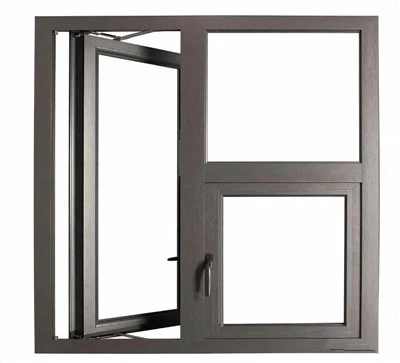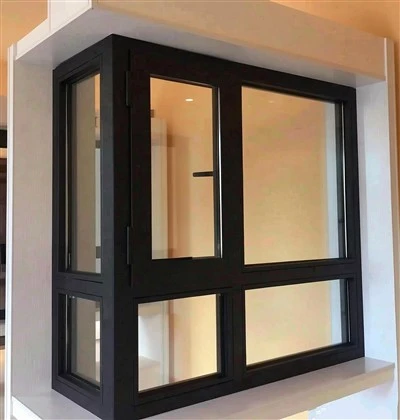



Hebei Hong'an Fire Door Co., Ltd. is one of the most reliable manufacturers and suppliers of aluminum alloy fire resistant window in China. If you're going to buy durable aluminum alloy fire resistant window made in China, welcome to get free sample from our factory. All customized products are with high quality and low price.
Aluminum Alloy Fire Resistant Window represent a critical advancement in modern building safety, combining the aesthetic appeal of aluminum framing with certified fire resistance capabilities. As building codes worldwide become increasingly stringent-particularly with the implementation of standards like GB 16809-2024, which officially categorizes Aluminum Alloy Fire Resistant Window as a distinct product class-these specialized windows have become essential for residential high-rises, commercial complexes, hospitals, schools, and industrial facilities.

Key Features of Aluminum Alloy Fire Resistant Window
Certified Fire Resistance Performance
The defining characteristic of Aluminum Alloy Fire Resistant Window is their ability to withstand intense heat while maintaining structural integrity and preventing flame spread. Premium systems offer fire resistance ratings ranging from 30 minutes (EI30) up to 120 minutes, with some systems certified to standards including EN 13501-2, UL 9, and ASTM E119. For residential applications-particularly buildings exceeding 54 meters in height-the requirement typically mandates C-class non-insulated fire windows with 1.0-hour fire integrity under GB50016-2014 standards.
Thermal Insulation and Energy Efficiency
Unlike traditional steel fire windows that transfer heat readily, modern Aluminum Alloy Fire Resistant Window incorporate thermal break technology using glass fiber reinforced polyamide strips-typically 35mm in width-which significantly reduce heat transfer coefficients. Advanced configurations achieve U-values as low as 0.8 W/(m²·K), far below standard fire windows (typically ≥1.8 W/(m²·K)), enabling compliance with stringent energy codes without compromising fire safety.
Superior Weather Resistance
The aluminum alloy surface undergoes specialized coating treatments-including fluorocarbon spraying or powder coating with minimum thickness of 60μm-providing exceptional resistance to UV radiation, corrosion, and weathering. High-quality fire windows demonstrate outstanding performance against environmental factors: wind load resistance up to Grade 9, water tightness up to Grade 6, and air permeability reaching Grade 8 under GB/T7106-2008 standards. These properties ensure reliable operation across diverse climate zones nationwide.
Automatic Fire Closure Mechanism
Operable Aluminum Alloy Fire Resistant Window feature thermally sensitive closing devices that automatically shut the window when temperatures reach threshold levels-typically around 68°C. Opening types include inner side-opening, outer side-opening, inner opening lower-hanging, and outer opening upper-hanging configurations, with the automatic closure occurring within 1.0 minute upon fire detection as required by GB16809-2008.
Aesthetic Versatility and Design Flexibility
One of the greatest advantages of Aluminum Alloy Fire Resistant Window is their visual appeal. The narrow sightlines and crisp edges achievable with aluminum framing-often through patented steel sub-frame systems with extruded aluminum cover caps-enable architects to maintain cohesive, aesthetically pleasing designs while meeting fire safety codes. Custom powder coating in the full RAL palette and various anodized finishes provide virtually unlimited color and finish options to match any architectural style.
Acoustic Insulation
The multi-chambered design and laminated fire-rated glass construction deliver acoustic performance of up to 45.3dB for select systems, creating quieter interior environments in high-noise urban settings-.
Material Composition and Specifications
The fire resistance of Aluminum Alloy Fire Resistant Window depends critically on the precise selection and integration of specialized materials.
The frame construction utilizes high-strength architectural aluminum alloy profiles-typically alloy EN AW-6060 or equivalent-with thickness requirements tied directly to fire classification. According to national standards: A-class (fully insulated) and B-class (partially insulated) fire windows require aluminum profile wall thickness ≥1.4mm, while C-class (non-insulated) windows may use ≥1.2mm. For building exterior windows, main profile base material thickness should be ≥1.8mm, with interior windows requiring ≥1.4mm-. These thicker profiles maintain structural strength at high temperatures where standard 1.0mm profiles would soften and deform within 30 minutes at 700°C.
The glass component represents the most critical element. High-performance Aluminum Alloy Fire Resistant Window employ non-insulated fire-resistant glass or composite insulated units-common configurations include 6mm fire glass + 12A air space + 6mm tempered glass. For extreme energy efficiency, quadruple-pane units with low-E coatings and krypton gas filling achieve ultra-low U-values. The fire-resistant glass must withstand direct flame exposure without shattering, maintaining integrity for the rated duration.
Essential for preventing smoke and flame penetration through frame joints, intumescent fire expansion strips are installed continuously within frame and sash channels. Quality strips begin expanding at temperatures ≥200°C, achieving expansion ratios ≥10 times to seal gaps tightly. These must be completely continuous with no breaks or voids-systems lacking proper expansion seals show flame breakthrough at just 30 minutes during testing.
All hardware components-hinges, handles, locking mechanisms, and corner connectors-must be fire-rated specialty hardware. Corner connectors require 304 stainless steel or galvanized steel with thickness ≥3mm, with aluminum alloy corner connectors prohibited due to high-temperature softening. Fastening screws must be 304 stainless steel with diameter ≥5mm, and all connection gaps sealed with fire-resistant caulking compounds.
Multi-chamber profile designs incorporate thermal break strips (glass fiber reinforced polyamide) and fire-resistant inserts within profile cavities-often steel reinforcements combined with fire-resistant grout or intumescent materials-that simultaneously block heat transfer and prevent flame propagation through the frame itself.
Applications and Compliance
Aluminum Alloy Fire Resistant Window are suitable for a wide range of installations where both safety and aesthetics are priorities: residential high-rise buildings above 54 meters (each unit requires one room with 1.0-hour fire-rated windows-5), commercial storefronts and curtain wall integration, educational facilities, healthcare institutions requiring both safety and natural light, industrial and service facilities, and office buildings. Leading systems have received CE certification and comply with DIN EN 16034, UL 9, ANSI/UL 9, and UBC 7-4 standards-.
As building codes continue to prioritize occupant safety without compromising architectural vision, Aluminum Alloy Fire Resistant Window represent the optimal solution-providing certified fire protection, exceptional energy efficiency, design versatility, and long-term durability.
Need specifications, custom sizing, or pricing information for your project? Contact us today to discuss your aluminum fire rated window requirements.
Hot Tags: aluminum alloy fire resistant window, China aluminum alloy fire resistant window manufacturers, suppliers, factory, Aluminum Alloy Fire Resistant Window, fire rated window, Fixed Fire Resistant Window, Steel Fire Resistant Window, Steel Thermal Insulating Fire Resistant Window, Wooden Fire Resistant Window