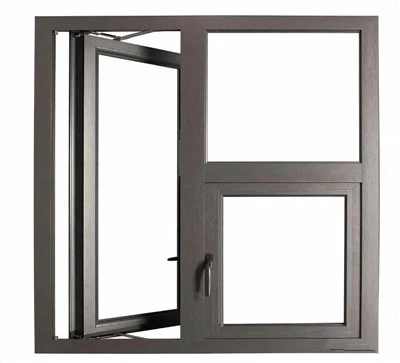
Hebei Hong'an Fire Door Co., Ltd. is one of the most reliable manufacturers and suppliers of fire resistant window in China. If you're going to buy durable fire resistant window made in China, welcome to get free sample from our factory. All customized products are with high quality and low price.
Fire Resistant Windows – Certified Protection with Design Versatility
Fire resistant windows are a critical component of passive fire protection systems in modern buildings. Engineered to contain flames, smoke, and radiant heat for a specified duration, these windows provide essential escape time and limit property damage without sacrificing natural light or architectural aesthetics. Whether for residential high-rises, commercial complexes, industrial facilities, or public buildings, high-performance fire resistant windows meet rigorous safety standards while offering excellent thermal and acoustic insulation.

Key Features of Fire Resistant Windows
Certified Fire Resistance Ratings
Fire resistant windows are tested and classified according to international standards such as EN 13501-2 (EI classification), BS 476, UL 9 (USA), AS 1530.4 (Australia), and GB 16809 (China). Common ratings include 30, 60, 90, and 120 minutes of fire integrity (E) and, where required, insulation (I) or radiation control (W).
E-class – prevents flame and hot gas passage.
EI-class – adds temperature rise limits on the unexposed side (max 140°C average / 180°C single point).
EW-class – limits heat radiation to ≤15 kW/m².
These ratings allow architects to match windows to specific building code requirements – for example, EI60 windows for escape routes in hospitals or EW30 for façade applications.
Automatic Self-Closing Mechanism
Operable fire windows are equipped with thermally triggered fusible links or intumescent closers that automatically shut the sash when ambient temperature reaches approximately 68 °C (154 °F). Closing occurs within 60 seconds, ensuring the fire compartment remains sealed even if the window was left open. Options include side-hung, top-hung, and bottom-hung configurations with concealed closers for clean aesthetics.
Multi-Chambered Frame Design
Unlike standard windows, fire resistant frames utilise multi-chamber profiles with strategically placed steel reinforcements and intumescent expansion seals. In a fire, the seals expand rapidly (up to 10–15 times their original volume) to fill gaps between frame and sash, blocking smoke and flame penetration. The chambered structure also reduces thermal bridging, contributing to overall building energy efficiency.
High-Performance Fire-Resistant Glazing
The heart of any fire window is the fire-resistant glass. Common types include:
Insulated glass units (IGUs) – combining fire-rated glass (e.g., 6 mm or 8 mm laminated or tempered fire glass) with standard glass and a sealed air cavity to achieve U-values as low as 1.0 W/(m²·K).
Multi-layer laminated glass – with intumescent interlayers that turn opaque and harden under heat, blocking radiant heat transfer.
Wire-mesh glass – traditional option for industrial applications, providing integrity but limited insulation.
Modern fire-rated IGUs can achieve sound reduction up to 45 dB and solar heat gain coefficients (SHGC) as low as 0.35.
Weather Resistance & Durability
All fire resistant windows undergo rigorous environmental testing. Typical performance values according to EN 1026 / EN 12207 or GB/T 7106 include:
Air permeability – Class 4 (600 Pa) or higher
Water tightness – Class 7A (700 Pa) or higher
Wind load resistance – Class 5 (2000 Pa) or higher
The aluminum or steel frames receive fluorocarbon or polyester powder coatings (≥60 µm thickness), ensuring UV stability, corrosion protection, and colour retention for 20+ years.
Material Options – Steel, Aluminum, or Timber?
Depending on the application and fire rating, fire resistant windows are available in three primary frame materials:
Steel Fire Windows
Thickness: ≥1.5 mm for hot-rolled sections
Advantages: Highest structural integrity; ideal for 90–120 minute EI ratings; narrow sightlines (as slim as 50 mm).
Applications: Industrial plants, stairwell enclosures, heritage building retrofits.
Aluminum Fire Windows with Thermal Break
Profile wall thickness: ≥1.8 mm for external use, ≥1.4 mm for internal
Advantages: Lightweight, corrosion-resistant, unlimited colour options (RAL powder coating), U-values down to 0.8 W/(m²·K) using glass-fibre-reinforced polyamide strips.
Applications: Residential high-rises (>54 m), commercial façades, schools, hospitals.
Fire-Resistant Timber Windows
Advantages: Natural warmth & aesthetics; EI30 to EI60 ratings achievable with intumescent coatings and protected glazing rebates.
Applications: Listed buildings, eco-hotels, luxury residences where steel/aluminum is visually intrusive.
All hardware (hinges, handles, locking pins, screws) must be stainless steel (304 or 316 grade) or hot-dip galvanised steel, with melting points ≥800 °C to maintain operation during a fire.
Shipping, Transportation & Logistics
Proper transport and storage are essential to preserve the factory-certified fire resistance of these windows. Follow these guidelines:
Packaging Standards
Each window unit is individually wrapped in bubble film or stretch wrap to prevent scratches.
Corner protectors (wood, plastic, or foam) are fitted to all four corners.
Glass panes are vertically packed in strong wooden crates or reinforced corrugated cartons, with foam padding between units and walls.
Crate strength must withstand stacking heights of at least 2.0 m and impacts during loading.
Labeling
Every shipping carton displays:
Product model, fire rating (e.g., EI60), dimensions, and quantity
Manufacturer name, batch number, and production date
Handling pictograms: "FRAGILE", "KEEP DRY", "THIS SIDE UP" (per ISO 780 / GB/T 191)
A waterproof bag containing product certificate, CE/UL declaration, installation manual, and maintenance guide.
Transport Conditions
Vehicles must be covered (enclosed or tarpaulin-protected) to avoid rain and dust.
Windows must be securely strapped using soft webbing or padded clamps – never metal chains directly against frames.
During loading/unloading, use forklifts with rubber-tipped forks or cranes with vacuum lifters for glass panels.
Maximum tilt angle during handling: 15° from vertical for glazed units to prevent glass stress.
Hot Tags: fire resistant window, China fire resistant window manufacturers, suppliers, factory, Casement Style Fire Rated Window, fire rated window, Fire Resistant Window, Steel Fire Resistant Window, Steel Thermal Insulating Fire Resistant Window, Wooden Fire Resistant Window