

Hey folks, if you’ve ever walked through a lab—whether it’s a university chem lab, a biotech startup’s wet lab, or a manufacturing facility’s quality control space—you’ve probably noticed a bunch of safety gear: fume hoods, spill kits, those weird eye-wash stations, and then… fire doors. I get it, fire doors aren’t the flashiest part of lab safety, but as someone who’s been in the normally closed fire door game for years, I talk to lab managers, EHS (Environment, Health, and Safety) leads, and even underwriters all the time—and one question pops up way more than you’d expect: Are normally closed fire doors actually required in labs? Let’s break this down like we’re chatting over a coffee, no stuffy jargon (well, maybe a little, but I’ll explain it).
First, let’s get one thing straight: labs are not your typical office spaces. Sure, an office has a coffee pot and maybe a space heater someone forgot to unplug, but a lab has flammable solvents, pressurized gas cylinders, reactive chemicals, fume hoods pulling volatile fumes around, and sometimes even high-voltage equipment that could spark a fire in a split second. So when it comes to fire safety, the rules are way stricter. But why specifically normally closed fire doors, not other types like normally open ones? That’s where things get interesting.
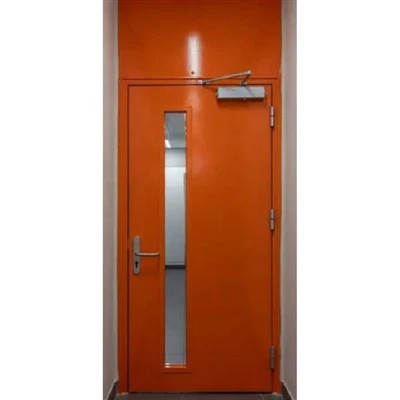
Let’s start with the basics of what a normally closed (NC) fire door is. Unlike normally open (NO) doors, which stay propped open for easy foot traffic and close automatically when a fire alarm goes off, NC fire doors are held shut only by a door closer—no hold-open device, no propping. They’re locked in the closed position all the time, unless someone’s actually passing through. And for labs, that fixed closed position is a game-changer. Wait, but let’s confirm the requirements. I’ve seen so many lab teams think “wait, can’t we just use something else?” But code-wise, it’s not a guess.
Looking at major safety standards—NFPA (National Fire Protection Association) is the big one here, especially NFPA 101 (Life Safety Code) and NFPA 45 (Standard on Fire Protection for Laboratories Using Chemicals). NFPA 45 is specifically tailored to labs, and it’s clear: for areas where hazardous materials are stored or used, fire barriers need to be impermeable to fire and smoke. NC fire doors are a key part of those barriers. Why? Because in a fire, smoke spreads way faster than flames—like, 3-4 times faster. That smoke isn’t just irritating; it’s toxic, can disorient people, and even knock out ventilation systems. If a lab has an NC fire door, it’s blocking that smoke and flames from getting to adjacent spaces: another lab, a hallway where people are evacuating, a storage closet for non-lab stuff. If you leave a door open, even if it’s automatic, there’s a split second when smoke or flames can get through before it closes—and in a fire, that’s all it takes to spread the disaster.
I know what some of you are thinking: “But our lab has super strict cleaning schedules and we need to move equipment around all the time—can’t we prop the door open temporarily?” No, and here’s why. Even if you think you’ll only prop it for an hour, a fire can start in 2 minutes flat. Last year, I worked with a mid-sized biotech lab that tried propping an NC door open during a week of equipment moves. A intern was heating up a volatile solvent (ethanol, common in labs) and left it unattended for 10 minutes while grabbing a new pipette. The solvent caught fire, and since the door was open, smoke and flames spread to the adjacent office area faster than the fire alarm could notify the local fire department. They got lucky—no one was hurt—but they had to pay a $12k OSHA fine and redo all their fire door assessments. That’s the kind of wake-up call that makes even the most “we can handle it” lab teams switch back to NC doors.
Wait, but what about other door options? Like, some suppliers push normally open fire doors, or stainless steel fire doors? Let’s talk about that. Normally open fire doors are great for spaces with constant high traffic, like busy hotel lobbies or hospital wards, where the risk of a door being left open accidentally is low. But labs? High traffic every hour, equipment deliveries, maintenance people rolling carts full of beakers or sample coolers—those doors get propped open all the time. So a normally open door relies on the alarm system working perfectly, every single time. If the power goes out (which happens in labs—sometimes the fume hoods pull too much power and trip the breaker), the hold-open magnets fail, and the door closes. But wait, what if the fire alarm’s wiring is damaged by the fire itself? Then that normally open door stays open, and the barrier is gone. NC doors don’t rely on power or alarms—they’re mechanical. That’s why NFPA 45 specifically calls out NC doors for high-hazard lab spaces, not NO ones.
And then there’s the stainless steel fire door option I often point people to: Stainless Steel Fire Door. Labs are often wet, have spills, use corrosive chemicals, so a steel door that can handle corrosion is a big plus. Stainless steel doesn’t rust if a solvent spills on it, which is way better than a standard steel door that would degrade over time from lab spills. But even a stainless steel door won’t do you any good if it’s left open. The material is important, but the state (open vs closed) is even more critical. Same with steel fire windows—those are great for seeing what’s going on in a lab without opening the door, but they only work if the door is closed. If the door’s propped open, the window doesn’t matter.
Another point: evacuation and access. Labs have a lot of specialized equipment, so when there’s an emergency, the fire department needs to get in fast, but also keep fire and smoke contained. NC fire doors create compartmentalization—they split the building into smaller fire zones. If a fire starts in one lab, the compartmentalization from NC doors means it doesn’t spread to the entire lab wing. That gives firefighters time to put out the fire without having to deal with a full-blown blaze. Some labs even go a step further with fire-and-blast resistant door—Fire‑and‑blast Resistant Door, which is super useful if they’re working with explosive materials, like in a pharmaceutical lab making dosage forms that involve high-pressure reactions. But even these doors are designed to be normally closed; their blast resistance is only effective when they’re shut.
Wait, let’s address a common myth: “Normally closed doors are a tripping hazard or slow down evacuation.” No, not if they’re installed correctly. They have door closers that are calibrated to close slowly enough that you can walk through easily, but fast enough that they seal within a few seconds. And they have push bars on the inside for emergency egress—so if you’re panicking during a fire, you just push the bar, the door opens, and you’re out. No fumbling with handles. I’ve seen lab teams install them and not even notice they’re there until a fire drill—then they realize how smooth they work. The only time they’re a hassle is when someone’s trying to prop them open for “convenience,” which is why we always remind teams: if you need constant access, maybe adjust your workflow instead of breaking a fire safety rule. Like, create a small access panel or a designated pass-through for carts that’s fire-rated, instead of propping the main door open.
Let’s also talk about inspections. Fire codes require regular inspections of fire doors, and inspectors will flag a normally open door used in a high-hazard lab as a violation. I had a client last year who used a NO door for their organic chem lab, and during a state EHS inspection, they got a $5k fine. The inspector said, “NFPA 45 says high-hazard lab areas need fire barriers that are closed and remain closed unless in use.” The lab tried to argue that their fire alarm system was top-of-the-line, but the code doesn’t care about your fancy alarm—it cares about the door’s default state. That’s a big one. Codes are built on the worst-case scenario: what if everything else fails? For fire doors, the worst case is a power outage, alarm failure, or someone knocking the alarm box off the wall. The door’s default state is your backup, and NC doors’ default is closed—your last line of defense.
Now, what about labs that have other fire protection measures? Like fire sprinklers, or fume hoods with fire suppression? Those are great, but they don’t replace fire doors. Sprinklers put out fires, but they can’t stop smoke from spreading. Fume hoods capture fumes, but if the door’s open, fire can jump from one hood to another. Fire doors work with those systems to create a layered defense. It’s like wearing a seatbelt and airbags—one helps, but both together are way safer.
Wait, I should also mention different lab types because not all labs are the same. A high-school science lab with Bunsen burners is different from a pharmaceutical lab with bulk chemical storage, which is different from a university research lab working with radioactive materials. But even for the lower-hazard labs, NFPA 101 (the general Life Safety Code) says that all labs should have fire doors that are either NC or NO, but NC is preferred when there’s any flammable material present. For higher-hazard labs—like those using gasoline, hydrogen, or other extremely flammable gases—NC doors are not just preferred; they’re required. I’ve seen labs that ignored this and ended up with fires that could have been contained. One university lab in the Midwest had a hydrogen leak that sparked, and because the lab used a NO door, the fire spread to three adjacent labs before the alarm went off. The damage was over $2 million. That’s not a risk worth taking.
Another question I get: “Can we modify a normally open door to be normally closed?” Technically, yes—you just remove the hold-open magnets and add a closer. But is it worth it? For labs, absolutely. NO doors are designed for spaces where constant open access is needed, but labs don’t need that. Most lab doors only see heavy traffic during equipment deliveries or when researchers are moving samples between rooms. For the rest of the time, they can be closed. Modifying is cheaper than dealing with fines or fire damage, and it keeps your team safe.
And let’s talk about durability, since I’m in the fire door business. Lab environments are tough—spills, steam, moving carts, dust from glassware. Steel fire roller shutter is an option for larger openings, like where a lab’s loading dock is, and it’s more durable than wood doors, which warp and get damaged by chemicals. But again, it’s a normally closed shutter, right? If you leave a roller shutter open, smoke can get under it, and flames can spread. So even for big openings, NC is the way to go. Stainless steel doors are even better for corrosive labs—like those used in environmental testing labs that handle acid spills. The stainless steel fire door I linked to earlier is designed to withstand not just fire, but also chemical exposure, so it won’t corrode after a year of use. That saves you money in the long run because you don’t have to replace it every few years.
Wait, let’s wrap this up with some clear takeaways, because I know this can feel overwhelming for someone just trying to keep their lab safe. First: Yes, normally closed fire doors are required in most labs, especially those handling hazardous materials. Check NFPA 45 and your local fire code to confirm, but that’s the standard. Second: Normally open doors are a bad fit for labs because they rely on external systems that can fail, while NC doors are mechanical and default to closed, no power needed. Third: Don’t prop doors open—even for a minute, a fire can start in that time. Fourth: Choose the right door material for your lab—stainless steel if you have corrosive spills, steel roller shutters for large openings, and fire-and-blast resistant doors if you’re working with explosive materials. All of these work best when they’re normally closed.
At the end of the day, lab safety isn’t about cutting corners or taking risks to make things a little easier. It’s about protecting the people who work there, the students, the facility, and the surrounding area. I’ve been doing this for 12 years, and I’ve seen firsthand how a fire door that’s closed can save lives. I don’t want to see another lab go through the stress of a fire, a fine, or a loss because they thought a door being open was a small thing.


If you’re a lab manager or EHS lead and you’re not sure if your fire doors are compliant, or if you need to upgrade to NC doors, feel free to reach out. We can help you figure out the right doors for your space—whether it’s a stainless steel fire door for a corrosive environment, a steel fire window to add visibility, or even a fire-and-blast resistant door for your high-hazard work. Don’t wait until an inspector comes or something goes wrong—take the step now to make your lab safer.
References:
- National Fire Protection Association (NFPA). (2021). Standard on Fire Protection for Laboratories Using Chemicals (NFPA 45). Quincy, MA: NFPA.
- National Fire Protection Association (NFPA). (2021). Life Safety Code (NFPA 101). Quincy, MA: NFPA.
- Occupational Safety and Health Administration (OSHA). (2022). Laboratory Safety Guidance. Washington, DC: OSHA.
- International Code Council (ICC). (2021). International Building Code (IBC). Country Club Hills, IL: ICC.
- Underwriters Laboratories (UL). (2020). Standard for Fire Tests of Door Assemblies (UL 10B). Northbrook, IL: UL LLC.