

The Truth About Damaged Wooden Fire Doors: Can They Actually Be Repaired?
As a wooden fire door supplier, this is one of the most common questions I get from building managers, maintenance technicians, and facility operators. When a wooden fire door gets a dent, a split in the wood, or even a hole from a careless delivery or minor impact, people often panic—worried that it’s no longer compliant with fire safety standards and needs full replacement. But over the past decade working in fire door supply and installation, I’ve seen both successful repairs and costly mistakes that come from trying to fix a wooden fire door when it’s not safe to do so.
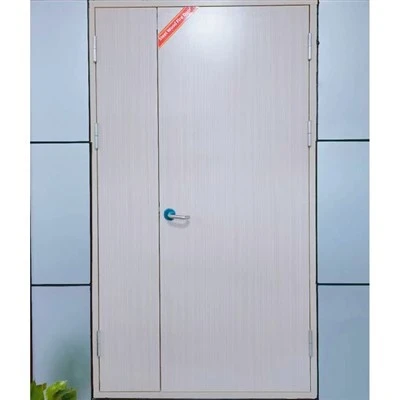
First, let’s get one thing straight: not all wooden fire doors are created equal. The wooden doors we supply aren’t your standard interior hollow-core doors. They’re engineered with specific fire-resistant materials, like intumescent seals that expand when heated, mineral wool cores, and plywood or solid wood panels treated to slow combustion. That means when damage happens, we can’t just use regular wood filler and sand it down—those quick fixes don’t stand up to the heat of a fire, and they can actually compromise the door’s ability to contain flames and smoke.
So, what kind of damage is actually repairable? From my experience, minor surface damage is usually no problem. Scratches, small dents (less than 1 inch deep), and chipped paint that doesn’t affect the door’s structural integrity or fire-rated components can be fixed. But here’s the key: before any repair work starts, you have to check the door’s rating and the type of damage. For example, if the damage is in the area where the intumescent seal is located—usually along the edges—you can’t just fill that spot; you have to make sure the seal is still intact because that’s what stops smoke from seeping through.
Let’s break it down with a real example. Last year, a client in a downtown office building called me because two of their wooden fire doors had been dented by a forklift during a delivery. The dents were on the face of the door, about half an inch deep, and didn’t go through the wood. We sent our technician to assess the damage, and he confirmed that the door’s core, frame, and seals were all undamaged. We were able to use a wood filler that’s formulated for fire-rated doors—regular filler would dissolve when heated, so this special filler is designed to maintain its structural properties at high temperatures. We sanded the area, refinished it with a fire-resistant paint, and the door passed its next fire safety inspection with flying colors. That’s the kind of repair that works, but only because we followed the right steps.
Now, what kind of damage can’t be repaired? This is crucial because trying to fix these issues can lead to serious safety hazards. If there’s a split that goes all the way through the door, or a hole larger than 1 inch, that’s a no-go. Also, if the door’s frame is damaged—especially the part that holds the intumescent seal—or if the hinges are bent or misaligned, that affects how the door closes, which in turn affects its fire performance. I once had a client who tried to fix a split door with wood glue, and when we tested it, the split opened up at 200 degrees Fahrenheit, letting smoke through. That’s why it’s always better to get a professional assessment before attempting any repairs.
It’s also important to compare wooden fire doors to other types of fire doors that we supply. For example, steel fire doors are often thought of as more durable, but that doesn’t mean they’re indestructible. If you’re looking for a steel option, you can check out our steel thermal fire door, which is designed to withstand extreme heat, or our steel fire-proof door for high-risk areas. But wooden fire doors have their own advantages—they’re aesthetically pleasing, lighter, and easier to install in spaces where steel would look out of place. That’s why so many of our clients in office buildings, schools, and retail spaces choose wooden fire doors, as long as they’re properly maintained.


Another point to consider is regular maintenance. The best way to avoid having to deal with damaged wooden fire doors is to inspect them regularly. We recommend monthly visual checks to look for damage, and annual professional inspections to make sure the seals, hinges, and fire-rated components are working correctly. A lot of people wait until there’s a problem, but catching damage early can save you money in the long run—minor repairs are way cheaper than replacing an entire fire door, which can cost several hundred dollars each, depending on the rating and size.
I often get asked if there’s a difference between repairing a 1-hour fire door and a 3-hour fire door. The answer is yes. Higher-rated wooden fire doors have more robust cores and seals, so damage to those components is more likely to require replacement. For example, a 3-hour rated door has a thicker mineral wool core, so a hole that would be minor in a 1-hour door might go through the core in a 3-hour door, making it impossible to repair. That’s why it’s always important to know your door’s rating before attempting any work on it.
Now, let’s talk about common mistakes people make when trying to repair damaged wooden fire doors. The biggest one is using regular building materials. As I mentioned earlier, regular wood filler, paint, or sealant doesn’t work with fire-rated doors. These materials can burn quickly, lose their shape, and fail to contain flames. Another mistake is not checking the door’s alignment. Even if the damage is minor, if the door isn’t closing properly, the intumescent seal won’t work as designed. We’ve had clients try to fix a dent, only to notice a gap at the bottom of the door, which means smoke can get through. That’s why we always adjust the hinges and check the seal after any repair work.
If you do have significant damage that can’t be repaired, we have plenty of other options. For commercial spaces that need fire resistance along with security, our fire burglar security door combines both features, perfect for areas like storage rooms or entrances. For healthcare facilities, our medical clean door is designed to meet strict hygiene standards, along with fire protection. And for spaces that need smoke and flame containment without blocking access, our inorganic fabric fire curtain is a great alternative.
At the end of the day, the question of whether a damaged wooden fire door can be repaired isn’t a simple yes or no. It depends on the type and extent of the damage, the door’s fire rating, and using the right materials and professional expertise. As a supplier, I always encourage clients to err on the side of safety. If you’re unsure about whether your damaged wooden fire door can be repaired, don’t take a chance—reach out to a professional who specializes in fire doors. Trying to save a few dollars on a repair that doesn’t meet fire safety standards can have catastrophic consequences in the event of a fire.
If you’re dealing with damaged wooden fire doors and need guidance on whether to repair or replace them, or if you’re looking for high-quality fire doors for a new project, we’re here to help. Our team has years of experience in the fire door industry, and we can provide expert assessments, repairs, and supply top-rated doors that meet all national fire safety standards. Don’t compromise on fire protection—contact our team today to discuss your needs and find the right solution for your building.
References
- National Fire Protection Association. (2022). NFPA 80: Standard for Fire Doors and Other Opening Protectives. Quincy, MA: NFPA.
- International Code Council. (2021). International Building Code (IBC). Country Club Hills, IL: ICC.
- Fire Door Manufacturers Association. (2020). Best Practices for Fire Door Inspection, Maintenance, and Repair. Silver Spring, MD: FDMA.
- Underwriters Laboratories. (2021). Standard for Fire Tests of Door Assemblies (UL 10B). Northbrook, IL: UL.
- Woodwork Institute. (2019). Fire-Rated Wood Doors: Installation and Maintenance Guidelines. San Ramon, CA: WI.