

If you’ve ever walked through a bustling shopping mall on a Saturday afternoon, you’ve likely noticed how easy it is to get disoriented—endless stores, intersecting corridors, and crowds of people moving every which way. Now, imagine a worst-case scenario: a fire breaks out on the second floor, smoke starts billowing, and suddenly that familiar space turns chaotic. For many years, malls relied on generic smoke control systems, but a lot of property managers and safety engineers are now asking a specific question: Can glass smoke curtains actually work in these high-traffic, large-scale spaces? As a supplier of smoke curtain solutions, I get this question all the time, and the short answer is yes—though it’s not a one-size-fits-all fix. Let’s break down how glass smoke curtains function, why they’re a game-changer for malls, how they compare to other options, and what you need to consider if you’re thinking about installing them.
First, let’s clarify what a glass smoke curtain is, because it’s not the same as the flimsy window glass you might think of. These are specialized, fire-rated glass panels designed to contain smoke to a specific area during an emergency. Unlike traditional drywall or fabric-based barriers, glass smoke curtains are non-combustible, transparent, and can withstand extreme heat for extended periods—usually 1 to 3 hours, depending on the rating. That transparency is a huge benefit for malls, where aesthetics and wayfinding are non-negotiable. No one wants a dim, opaque barrier blocking views of their favorite stores or the mall’s iconic center court.
But why does this matter for shopping malls specifically? Malls have unique fire safety challenges that set them apart from office buildings or hospitals. They’re large, open atriums are common, and there are multiple tenant spaces with different occupancy levels. When a fire starts in a clothing store or a food court, smoke spreads fast—faster than flames, actually. In fact, the National Fire Protection Association (NFPA) reports that smoke inhalation is the cause of 60% of fire-related deaths in non-residential buildings, and malls are particularly risky because people might not know where exits are when visibility drops to just a few feet. Glass smoke curtains solve this by creating vertical and horizontal smoke barriers that stop smoke from migrating to other wings, stairwells, or escape routes. They also help keep evacuation routes clear, so first responders can move through the mall without fighting heavy smoke.
Now, let’s talk about how glass smoke curtains stack up against other common smoke control options, because that’s where a lot of the debate happens. For years, malls have used options like the Movable Smoke Curtain, Fixed Smoke Curtain, Roller Type Smoke Curtain, Fire Resistant Fabric Smoke Curtain, and Motorized Smoke Curtain. Each has its pros and cons, but glass has distinct advantages in mall settings. Let’s start with Fixed Smoke Curtain—these are rigid, permanent barriers made from concrete or metal, and while they’re effective at containing smoke, they’re also ugly. A fixed concrete wall cutting through an atrium would ruin the mall’s open, inviting design, turning a public space into a labyrinth of blockades. Fabric-based options like the Fire Resistant Fabric Smoke Curtain are more flexible, but they can tear under high heat or impact from falling debris, and they’re not as transparent. Roller Type Smoke Curtain works well for smaller spaces, but they often have bulk when rolled out, and the fabric or metal components can be an eyesore in a high-end mall. Motorized Smoke Curtain is convenient, as it can be activated automatically by fire alarms, but again, the material is often fabric or thin metal that can degrade over time if exposed to humidity or temperature fluctuations common in mall spaces (especially near food courts or loading docks).
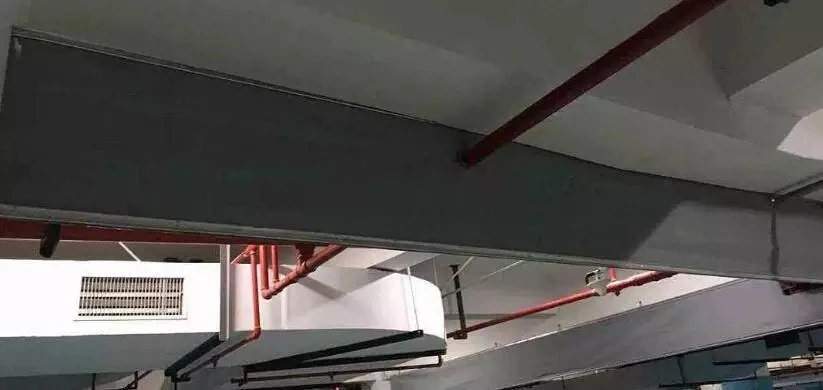

Glass smoke curtains, by contrast, combine durability, aesthetics, and functionality. They’re made from tempered or laminated fire-rated glass, so they don’t warp, tear, or break easily. In tests, they’ve been shown to withstand temperatures of up to 2,000°F for 2 hours without compromising their smoke-seal integrity. The transparency means that during a non-emergency, the mall still feels open and welcoming—shoppers can see from one end of the atrium to the other, store displays are visible, and wayfinding signs don’t get blocked. That’s a huge selling point for mall operators, who care both about safety and keeping their spaces attractive to tenants and customers.
But wait—does that mean glass smoke curtains are the perfect solution for every mall? No, and it’s important to be honest about their limitations. First, they’re more expensive upfront than some other options. Fabric smoke curtains, for example, might cost a fraction of what glass costs to install. But over time, glass smoke curtains have lower maintenance costs. Fabric can get stained, torn, or faded, especially in high-traffic areas near entrances where wind or foot traffic can catch the curtain. Glass is easy to clean, doesn’t fade, and requires almost no upkeep beyond occasional professional inspection. Another limitation: glass smoke curtains need to be installed by certified technicians who understand both fire safety codes and structural requirements. Malls are large, so custom measuring is key—one size doesn’t fit all when it comes to atriums, corridors, or stairwells. A poorly installed glass curtain could create gaps where smoke can seep through, which defeats the whole purpose.
There are also specific codes and standards to consider. In the U.S., NFPA 92 is the standard for smoke control systems, and glass smoke curtains need to meet the same fire resistance ratings as other barriers. In the EU, it’s EN 1364-1 for fire resistance tests. Mall operators need to work with a supplier that understands these codes, because not all glass smoke curtains are created equal. As someone in the industry, I’ve seen too many projects where a supplier tried to cut corners by using non-rated glass, and that resulted in failed inspections and expensive reworks.
Another factor that makes glass smoke curtains ideal for malls is their ability to integrate with existing fire systems. Most modern malls have automated fire alarm systems that trigger smoke curtains to deploy automatically when smoke is detected. Glass smoke curtains can be motorized—wait a minute, that’s right, you can have a motorized glass smoke curtain that retracts when not in use, so it doesn’t interfere with daily mall operations. That’s a big improvement over fixed barriers, which are always in place, or fabric roller curtains that might take up space when not activated. A motorized glass system can be programmed to deploy in specific zones, so only the area where smoke is detected is sealed off, leaving other parts of the mall open for evacuation or first responder access. I’ve worked with several mall projects where this zoning feature made a huge difference—during a test drill, the system only closed off the wing with the simulated fire, so shoppers in other areas didn’t even notice anything was happening.
Let’s get into a real-world example to make this concrete. Last year, we worked with a large regional mall in the Midwest that was renovating its main atrium. They originally planned to install fixed concrete barriers to comply with fire codes, but after testing glass smoke curtains, they changed their minds. The fixed barriers would have blocked 10 feet of the atrium’s open space, which meant losing 5 storefronts in the upper level. The glass curtains, on the other hand, could be installed along the atrium’s perimeter, sealing off smoke from spreading to the upper levels, while leaving the center of the atrium open for events—like holiday markets or fashion shows. The project came in on budget, passed all inspections, and the mall didn’t lose a single storefront. That’s the kind of win-win that makes glass smoke curtains worth considering.
Of course, there are still situations where other smoke curtain options might be better. For example, small boutique malls with limited budgets might opt for a Roller Type Smoke Curtain or Fire Resistant Fabric Smoke Curtain instead of glass. Or if a mall has very low ceilings or irregularly shaped spaces, a Movable Smoke Curtain that can be adjusted as needed might be more practical. But for large malls with open atriums, high foot traffic, and a focus on aesthetics, glass smoke curtains are hard to beat.
Now, let’s address a common misconception: some people worry that glass is too fragile to use in a mall, where there’s a lot of activity. That’s a valid concern, but modern fire-rated glass is designed to withstand impact. It’s laminated with a polyvinyl butyral (PVB) layer that holds the glass together if it breaks, so there’s no risk of sharp shards falling. In fact, it’s tested to resist impact from things like falling debris or even mall carts, which is a big plus. I’ve seen a test where a 10-pound metal pipe was dropped from 10 feet onto a glass smoke curtain, and it didn’t crack. That’s a level of durability that fabric or even thin metal curtains can’t match.
Another point: sustainability. Malls are under increasing pressure to be more environmentally friendly, and glass is a recyclable material. Unlike fabric smoke curtains, which end up in landfills when they wear out, glass can be melted down and reused. That’s a big plus for mall operators looking to meet green building certifications like LEED or BREEAM.
So, putting it all together, can glass smoke curtains be used in shopping malls? The answer is a resounding yes—when chosen for the right application and installed correctly. They solve unique problems that other smoke control systems can’t, like maintaining a mall’s open, inviting design while still keeping occupants safe from smoke. They’re durable, easy to maintain, can integrate with automated fire systems, and meet all the necessary safety codes. That said, they’re not the right choice for every mall. Smaller malls with tight budgets or irregular spaces might be better served by other options like Movable Smoke Curtain, Fixed Smoke Curtain, Roller Type Smoke Curtain, Fire Resistant Fabric Smoke Curtain, or Motorized Smoke Curtain. The key is to work with a knowledgeable supplier who can assess your mall’s specific needs, space layout, and budget to recommend the best solution.
If you’re a mall operator, facilities manager, or safety engineer considering upgrading your smoke control system, I’d encourage you to reach out for a consultation. Every mall is different, and what works for one might not work for another. A good supplier will walk you through the pros and cons of each option, show you real-world examples of installations, and help you navigate the code requirements to make sure your system is both safe and effective. Whether you’re renovating an existing mall or building a new one, investing in a high-quality smoke control system is non-negotiable for keeping your shoppers, tenants, and staff safe. Glass smoke curtains aren’t a silver bullet, but they’re a powerful tool that’s transforming how malls approach fire safety—all without sacrificing the vibrant, welcoming spaces that make malls such important community hubs.
References
- National Fire Protection Association. (2020). NFPA 92: Standard for Smoke Control Systems. Quincy, MA: NFPA.
- European Committee for Standardization. (2019). EN 1364-1: Fire Resistance Tests for Non-Loading Bearing Elements - Part 1: Walls. Brussels, Belgium: CEN.
- Fire Protection Association. (2022). Smoke Control in Large Open Spaces: Best Practices for Commercial Buildings. London, UK: FPA.
- Underwriters Laboratories. (2021). UL 1784: Standard for Air Leakage Tests for Duct Systems and Components. Northbrook, IL: UL.