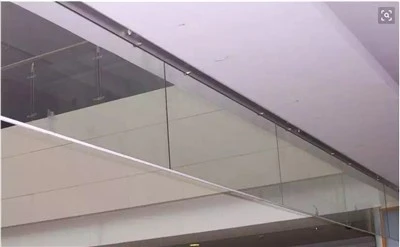

Tempered glass is not equal to smoke barrier components

Tempered glass is not equal to smoke barrier components, a distinction often overlooked by purchasers and constructors. Tempering is merely a mechanical strengthening process and cannot deliver the required fire integrity and thermal stability for smoke barriers.
Smoke barriers are designed to contain smoke in early fires, maintain smoke zones, support smoke exhaust systems and buy evacuation time, rather than resist fire.
According to GB 51251-2017, smoke barriers shall be made of non-combustible materials. Glass smoke barriers must meet specified fire resistance. Although tempered glass is non-combustible, it suffers poor thermal stability. Sharp temperature differences in fire cause thermal cracking. Broken glass leaves openings for smoke to spread and invalidates smoke compartments.
Fire inspection checks barrier integrity, not fragment hazards. Ordinary tempered glass without heat soak or fire-resistant modification cannot withstand thermal shock and shall not be directly used for fixed glass smoke barriers.
Mandatory Requirements for Compliant Glass Smoke Barriers
Material Selection: Fixed glass smoke barriers shall use monolithic fire-resistant glass or composite fire-resistant glass. A type test report for the complete smoke barrier assembly is required; fire test reports for glass alone are not acceptable. The full assembly (glass + frame + fixing system) is tested as one unit. Qualified glass does not guarantee qualified assembly, a point often missed by designers.
Frame & Fixing: Frames shall be non-combustible metal profiles such as galvanized steel or stainless steel, mechanically clamped. Adhesive-only fixing is prohibited. Glass edges shall be chamfered and polished to remove stress concentration and reduce thermal breakage risk. Joints between glass panels and gaps between glass, walls and ceilings shall be sealed with non-combustible sealant to block smoke leakage.
Installation Dimensions: Vertical drop ≥500 mm. Single glass panels shall not be oversized; reinforcing frames are required for larger sizes. Anti-collision warning components may be fitted at the bottom to prevent damage from renovation work or vehicles.
Documentation for Inspection: Submit full smoke barrier type test reports and product certificates on site. Verify model and specifications match site conditions. On-site sampling may be conducted when necessary. Using only tempered glass certificates for inspection is not permitted.

Glass smoke barriers offer both visual transparency and fire protection, and are increasingly adopted in commercial complexes. However, aesthetics must not compromise fire safety. Many projects fail inspections because ordinary tempered glass is mistakenly used as smoke barrier components. Parties only check non-combustibility while ignoring thermal stability and structural integrity under fire heat. A smoke barrier is not merely a glass partition but an essential part of the smoke control system. Material selection, frame structure and product certification are all mandatory. Owners, designers and constructors shall understand code requirements, avoid low-cost traps. Ordinary tempered glass shall not be directly used for smoke barriers to prevent rework during fire inspection and safeguard building smoke control safety.