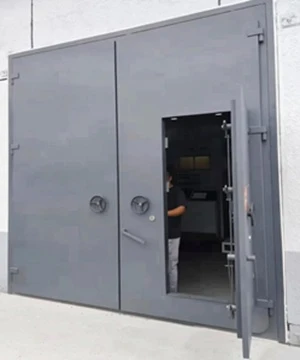
Working Principle of Pressure Relief Door

When the door leaf flips outward to the preset angle (normally 70°~90°), the limiting device tightens to restrict the maximum opening angle. After the explosion pressure subsides, the door leaf stays suspended, and it can be manually pushed back into place for re-fixing.
The pressure relief door is a passive safety pressure relief component. Its working principle is not to rigidly resist explosion loads, but to directionally discharge overpressure: In case of deflagration or explosion of combustible dust and combustible gas indoors, instantaneous shock wave overpressure will be generated in the enclosed space. When the pressure reaches the preset threshold, the door body automatically opens outward to rapidly discharge high-pressure airflow and high-temperature flue gas. This limits the peak indoor pressure within the bearing capacity of building walls, beams and columns, so as to protect the main structure of the building.
The door leaf is locked by pressure relief bolts and pressure relief hinges, and keeps airtight with sealing strips. It can resist wind pressure, ensure air tightness, dust prevention and leakage prevention of combustible gas under daily operating conditions. The door only allows one-way outward pressure relief and is prohibited from opening inward, so as to avoid backflow of external shock waves and flames.
Explosion Accident Working Conditions