

If you’ve ever worked in industrial construction or facilities management, you know fire safety isn’t just a box to check—it’s non-negotiable. I’m the sales lead at a fire-rated window supplier, and one question I get all the time is: Can fire rated windows even work in industrial buildings? Let’s cut through the confusion, break down why they’re actually critical for industrial spaces, and show you why they’re not a “nice-to-have” but a must-have for most industrial sites.
First, let’s get real about what industrial buildings are like. Think big warehouses, manufacturing plants, auto body shops, chemical storage facilities, or food processing factories. These spaces have way more fire hazards than your average office or retail spot—think flammable materials, heavy machinery, electrical overload risks, even processes that generate heat. So when you’re designing or retrofitting an industrial building, every opening in the exterior walls, separating walls, or roofs has to hold up its end of the fire safety plan. Windows might seem like a small part, but trust me, they’re a weak point if they’re not rated properly.
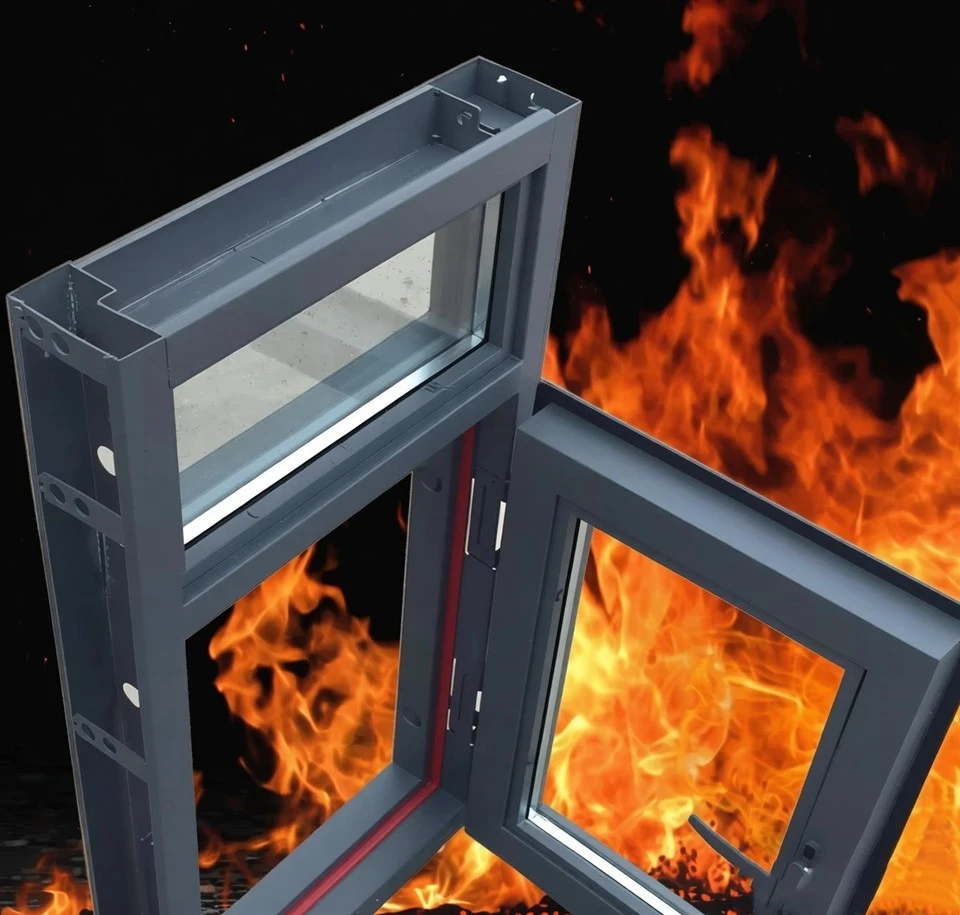
Wait, what’s a fire-rated window anyway? Unlike regular windows that just keep weather out, fire-rated ones are tested to withstand flames, heat, and smoke for a specific amount of time—usually 20 minutes, 45 minutes, 1 hour, or 3 hours, depending on the building’s needs. They’re designed to stop fire from spreading through the window opening, both inside the building (like from a storage area to a processing zone) and outside (like from a neighboring structure or wildfire). That’s not just a regulatory thing, either—it’s about protecting workers, assets, and keeping fire departments from being overwhelmed.
Now, let’s talk about why industrial buildings specifically need these. Most industrial spaces have large floor plans, so if a fire starts in one corner, it can move fast through open air spaces. If the windows in the firewall between two sections aren’t rated, that firewall is basically useless. Also, industrial areas often have roof openings or exterior walls that face other industrial buildings or even public areas. If a window fails during a fire, flames can shoot out, ignite nearby materials, and make the fire way harder to control. I’ve seen firsthand what happens when regular windows are used in these spots—small fires turn into total losses because the window collapsed in minutes instead of holding the line.
But here’s the thing: not all fire-rated windows are made the same for industrial use. Regular residential fire-rated windows might not stand up to the harsher conditions in industrial spaces. Industrial buildings need windows that can handle higher temperatures, maybe heavy winds (if they’re in a coastal area or exposed to weather), and even minor impacts from things like forklifts or falling debris. That’s why we design our lines with industrial needs front and center. For example, our Steel Fire Resistant Window is built with heavy-duty steel frames that don’t warp or buckle when exposed to high heat—something regular aluminum windows might do in less than 30 minutes. This is a big one for manufacturing floors where forklifts are moving around all day, too; they’re less likely to get damaged by accidental bumps, so you don’t have to worry about fire safety failing because of a dented frame.
Another common question: Do fire-rated windows hurt energy efficiency in industrial buildings? A lot of facility managers worry that adding a rated window will jack up heating or cooling bills, especially in big warehouses. Nope, not anymore. We’ve got options that balance fire safety with thermal performance. Our Aluminum Alloy Fire Resistant Window, for example, uses thermal breaks to stop heat transfer, so it keeps conditioned air inside just like a regular high-performance window. And if you’re in a climate that gets super hot or cold, our Steel Thermal Insulating Fire Resistant Window takes that a step further—its core is filled with insulating material that reduces energy loss by up to 40% compared to standard fire-rated windows, according to third-party tests. That’s a win-win: you meet fire code and save money on utilities, which is a huge deal for industrial sites with massive footprints.
Now, what about different types of industrial spaces? Because one size doesn’t fit all. If you’ve got a storage yard with bulk flammable materials, or a separating wall between two production zones, you might need a fixed fire resistant window. These don’t open, which is perfect for spots where you just need a barrier—no need for ventilation or access through the window. They’re even more durable than operable ones, since there’s no moving parts that can fail in a fire. On the flip side, if you need window access for cleaning, emergency egress, or even ventilation (like in a workshop where fumes build up), our Casement Style Fire Rated Window is the way to go. It opens outward, so it won’t block fire department access, and it passes all the same fire tests as our fixed models. We even make them with heavy-duty hinges that can handle being opened and closed thousands of times, which is a must for industrial sites that need regular maintenance access.

Let’s talk about codes, because that’s the big driver here. Most countries have building codes (like IBC in the US, or CE standards in the EU) that require fire-rated assemblies in industrial buildings, specifically in areas with high fire hazard loads. The International Fire Code, for example, says that any opening in a fire-resistance-rated wall (which is required between different occupancies in an industrial site) must be protected with a fire-rated window. If you use a regular window, you’re not just taking a risk—you’re violating code, which can lead to fines, failed inspections, or even having to tear out and replace all your windows after you get a violation. I’ve had a few customers come to us after being cited for using standard windows; they had to stop operations until they replaced them, which cost way more than just getting the right windows the first time.
But wait, some industrial owners think “we’re in a low-hazard area, so we don’t need it.” That’s a dangerous call. Even a small electrical fire in a warehouse can turn bad fast. For example, a friend who runs a small auto parts warehouse had a fire start from an overloaded socket near a regular window. The window melted in 12 minutes, and the fire spread to a pile of cardboard boxes next to the wall, taking out half the warehouse. If he’d had a 2-hour rated window, that fire would’ve been contained to the outlet area, and his losses would’ve been minimal. Fire doesn’t care if you think your space is low-hazard—it just needs a little oxygen or a flammable material to spread.
Another point: smoke. A lot of people forget that smoke is just as deadly as fire in industrial spaces, where workers might be in the building during operations. Fire-rated windows aren’t just about stopping flames—they also reduce smoke transmission. That’s a big safety win for your team, because it gives people more time to evacuate and fire crews more time to put out the fire before it gets bad. Our windows are tested to limit smoke leakage, which is a requirement for most industrial fire safety plans now.
Now, can you go overboard with fire-rated windows? Yeah, maybe. For example, if you have a small office nook inside a big warehouse, you might not need a 3-hour rated window for that. But that’s where working with a supplier that knows industrial buildings comes in—we can help you figure out exactly what rating you need for each window, based on its location, the fire hazard of the surrounding area, and local codes. We don’t push the most expensive option if you don’t need it, but we don’t cut corners either.
So what does the process look like when you’re switching to fire-rated windows for an industrial building? First, you tell us about your space: what type of industrial use it is, the layout, where the windows are going, any specific needs (like energy efficiency, forklift impact resistance). Then we’ll recommend the right models—maybe a Steel Fire Resistant Window for the loading dock area, an Aluminum Alloy Fire Resistant Window for the office sections, our Steel Thermal Insulating Fire Resistant Window for the north-facing walls that get cold in winter, Fixed Fire Resistant Windows for the storage zone separating walls, and Casement Style Fire Rated Windows for the maintenance bays. We’ll also make sure all the windows are certified to the relevant standards, so you don’t have to worry about inspections.
And here’s a final thought: industrial downtime is expensive. If a fire happens, not only do you risk losing property, but you might have to shut down operations for weeks or months while you rebuild. Fire-rated windows are a small investment compared to the cost of a total fire loss. I’ve seen customers spend $50k on our windows for a 10,000 sq ft warehouse, and that’s nothing compared to the $2 million one customer lost when a fire broke out and spread because of regular windows.
If you’re working on an industrial project right now—whether it’s new construction or a retrofit—don’t sleep on fire-rated windows. They’re not just code compliance; they’re a lifeline for your workers and your business. We’ve helped dozens of industrial facilities across the country upgrade their window systems, and we can help you too. Reach out to our team to talk through your needs, get a customized quote, and answer any questions you have about which windows work best for your space.
References
- International Code Council. (2021). International Building Code (IBC) Chapter 7: Fire and Smoke Protection Features.
- International Code Council. (2021). International Fire Code (IFC) Chapter 17: Fire Protection Systems and Equipment.
- Underwriters Laboratories (UL). (2022). Standard for Fire Tests of Window Assemblies (UL 972).
- National Fire Protection Association (NFPA). (2021). NFPA 80: Standard for Fire Doors and Other Opening Protectives.
- Steel Construction Institute. (2020). Fire Resistance of Steel Window Assemblies for Industrial Applications.