

If you’ve ever walked through a modern warehouse, you’ve seen the scale of operations: towering shelves stacked with palletized goods, narrow aisles crammed with forklifts, and a constant hum of equipment working to meet delivery deadlines. For facility managers, the biggest safety question isn’t just how to keep the space running smoothly—it’s how to protect the people, inventory, and structure from one of the most devastating risks: fire.
For years, there’s been a common misconception that steel thermal fire doors are only for office towers, hospitals, or high-rise buildings, not for sprawling, industrial warehouses. But as someone who’s supplied fire-rated door solutions to warehouses across North America for over a decade, I can tell you that this assumption couldn’t be further from the truth. In fact, steel thermal fire doors are often the most effective safety investment a warehouse can make—if you understand how they work, when to use them, and how to pair them with the right complementary fire protection products.
Let’s start with the basics. A steel thermal fire door isn’t just a regular door made of steel. It’s engineered to withstand extreme heat, slow the spread of flames and smoke, and maintain structural integrity for a set period—usually 1, 2, or 3 hours, depending on the local building code. Warehouses are unique fire risks, and their specific needs demand doors that can handle those risks head-on. First, warehouses hold large quantities of combustible materials: cardboard packaging, wood pallets, textiles, and even finished goods like furniture or electronics. A single spark from a faulty forklift or overheated electrical panel can quickly ignite a blaze that spreads faster than in almost any other commercial space. Second, warehouses often have large, open floor plans with high ceilings, which means fire and smoke can rise and circulate rapidly, making evacuation a race against time. Third, many warehouses have multiple access points: loading docks, employee entry doors, and service corridors, all of which need to be sealed against fire to contain an incident in one area before it grows.
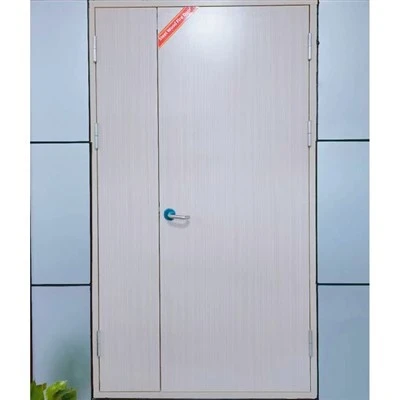
So why are steel thermal fire doors a better fit for these scenarios than other types of doors? Let’s compare them to common alternatives. Wooden doors, even if fire-treated, simply can’t match steel’s resistance to high heat. Fire-treated wood may char, warp, or fail in less than an hour in a blaze, which isn’t enough time to keep a fire contained in a warehouse. That’s why our Steel Wood Fire Door is a niche product best suited for spaces like warehouse offices or break rooms adjacent to the main storage area—not for high-risk zones or critical access corridors.
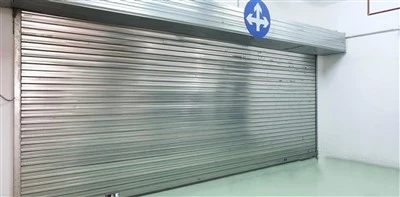
What about other steel door options, like steel fire roller shutters? Roller shutters are great for wide loading dock openings, where you need a large, operable barrier that closes quickly. But they have limitations: they’re often bulkier, can be slower to deploy in an emergency, and may not seal as tightly against smoke as a solid, hinged steel thermal fire door. That’s why roller shutters work best paired with hinged steel thermal fire doors, rather than replacing them entirely for smaller, internal corridors.
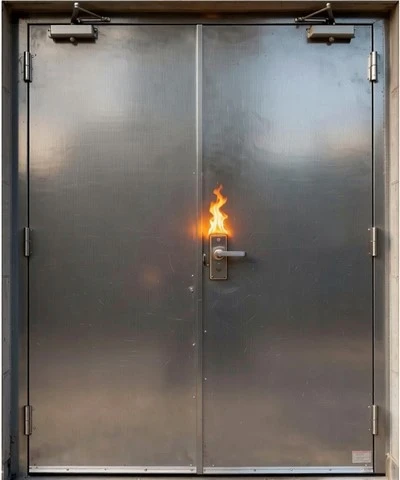
Then there’s the question of smoke, which is actually the leading cause of fire-related deaths, not flames. Steel thermal fire doors create a tight, airtight seal when closed, preventing smoke from spreading through the warehouse. Stainless steel fire doors, for example, are ideal for warehouse zones that handle corrosive materials or face harsh environmental conditions (like refrigerated warehouses or areas near loading docks exposed to rain or debris). Our Stainless‑steel Fire‑rated Door is built to resist both fire and corrosion, making it a durable choice for specialized warehouse applications.
Now, let’s get into the hard science that makes steel thermal fire doors work in warehouses. Most steel thermal fire doors are made with a solid steel core surrounded by a steel outer frame, filled with a non-combustible, heat-resistant material like mineral wool or ceramic fiber. This core absorbs heat, preventing the steel from warping or melting, and stops flames from passing through. Testing by third-party organizations like Underwriters Laboratories (UL) or the National Fire Protection Association (NFPA) confirms that these doors can maintain their structural integrity even when exposed to 1,200°C (2,200°F) temperatures for hours. For a warehouse, that means a fire starting in a pallet storage area can be contained, giving firefighters time to respond and reducing the risk of total inventory loss.
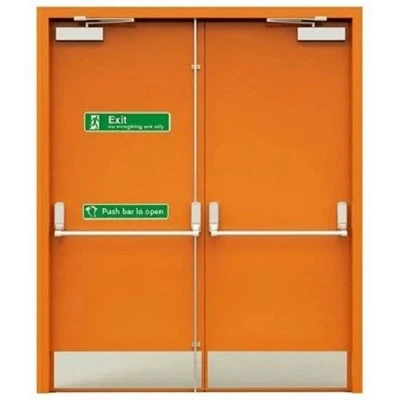
But here’s the key: steel thermal fire doors don’t work in isolation. Fire safety in warehouses is a system, not a single component. That means you need to think about how these doors integrate with your overall layout, emergency exits, and fire detection systems. For example, all warehouses require clear evacuation routes, and the doors on these routes need to be operable without special tools, even during a power outage. Our Fire Doors for Evacuation Routes are specifically designed for this purpose: they meet strict egress requirements, have panic hardware for quick opening, and are compatible with emergency power systems so they close or unlock if needed without relying on electricity. This is a critical point—if your steel thermal fire door is blocking an evacuation path, it’s more of a hazard than a solution.
I’ve seen firsthand what happens when warehouses cut corners on this balance. A few years back, I worked with a mid-sized e-commerce warehouse that installed cheap, unrated metal doors on their internal fire corridors to save money. When a fire started in a storage bay, the door on the adjacent corridor failed in 20 minutes, allowing smoke and flames to spread to the packing area. Employees had to evacuate through a different route, and the warehouse lost $2 million in inventory before the fire was put out. That experience reinforced a lesson I’ve carried with me ever since: in warehouses, fire doors aren’t just code compliance—they’re a financial and safety lifeline.
Another common question I get is about loading docks, which are the most vulnerable access points in a warehouse. A loading dock is a wide opening that’s often left open, and it’s a common entry point for fire (or smoke from an adjacent structure). For these areas, steel fire roller shutters are the go-to solution, because they can cover a large opening and close automatically if the fire alarm triggers. But if you think a roller shutter is enough for the entire warehouse, think again—roller shutters are not designed for small, internal corridors that connect storage zones to offices or break rooms. That’s where steel thermal fire doors come in, creating a layered defense: roller shutters on large access points, hinged steel thermal fire doors on internal walls, and Stainless Steel Fire Door for zones that need extra corrosion resistance.
Let’s also talk about maintenance, because a fire door is only as good as its ability to function when you need it. Many warehouse managers install a fire door and then forget about it, only to find years later that the hinges are rusted, the seal is broken, or the door doesn’t close properly. For steel thermal fire doors, regular maintenance is simple but critical: check that the door closes fully, that the seals are intact, and that hinges and hardware are lubricated. Steel is durable, but it can rust if exposed to water or chemicals common in warehouses, so inspecting doors quarterly is a small task that prevents big failures.
Now, let’s address the elephant in the room: local building codes. In most regions, warehouses are classified as Group F (Industrial) occupancies under NFPA standards, and fire doors are required in specific locations: between storage areas and egress routes, between different fire zones, and around high-hazard areas (like areas with flammable liquids or electrical equipment). Steel thermal fire doors are the most common type approved for these locations because their fire-resistance ratings are well-documented and easy to verify. Non-steel options might not meet the required rating, or might not be approved for high-hazard warehouse environments.
I want to be clear: I’m not saying steel thermal fire doors are the only fire door option for warehouses. For example, if you have a small, low-risk warehouse with minimal combustible materials, a fire-rated wooden door might work, but that’s rare. For most warehouses—especially those over 10,000 square feet, with high storage racks, or heavy forklift traffic—steel thermal fire doors are the best choice. They’re durable, compliant, and proven to stop fires and smoke from spreading, which is exactly what a warehouse needs to protect its people and assets.
If you’re a warehouse manager or facility safety officer, the next step is to assess your space’s specific needs. Take stock of your fire zones, evacuation routes, access points, and any specialized areas (like cold storage, chemical storage, or high-electrical-use zones). Talk to a fire door supplier that can help you match the right doors to your layout: steel thermal fire doors for internal corridors, steel fire roller shutters for loading docks, Stainless‑steel Fire‑rated Door for harsh conditions, and Fire Doors for Evacuation Routes for egress paths.


At the end of the day, investing in the right fire doors isn’t just about checking a box for inspections—it’s about peace of mind. I’ve visited warehouses where a well-placed steel thermal fire door contained a fire that would have closed the business for months, and I’ve seen facilities where a missing or damaged fire door led to devastating losses. The difference is simple: they took the time to choose doors that fit their space, not just the cheapest option.
If you’re ready to evaluate your warehouse’s fire door needs or discuss specific solutions, our team is here to help. We work with facilities of all sizes, from small regional warehouses to large national distribution centers, and can provide customized recommendations tailored to your layout and local codes. Don’t wait until it’s too late—protect what matters most with fire doors built to perform in the unique environment of a warehouse.
References
National Fire Protection Association. (2021). NFPA 101: Life Safety Code. Quincy, MA: NFPA.
Underwriters Laboratories. (2022). UL 10B: Standard for Fire Tests of Door Assemblies. Northbrook, IL: UL.
Steel Door Institute. (2020). Fire-Rated Steel Doors: Application Guide for Industrial and Warehouse Facilities. Cleveland, OH: SDI.