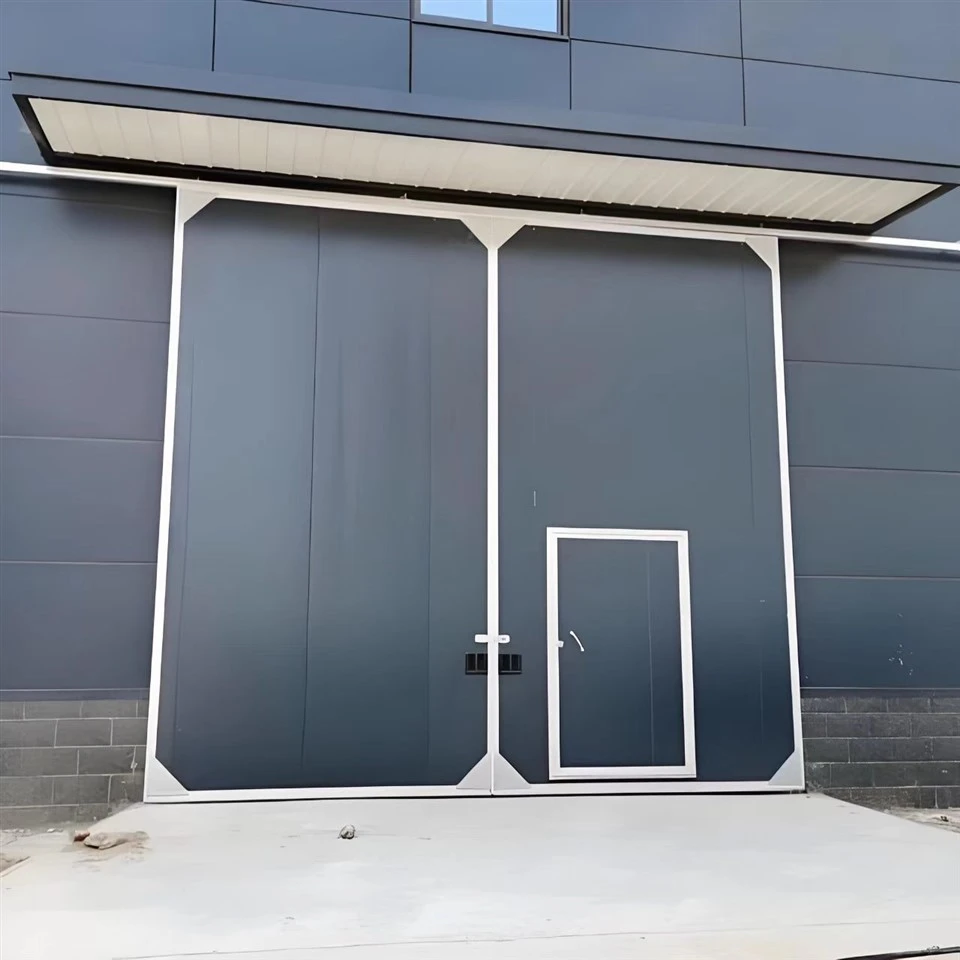


In the realm of industrial safety, explosion proof doors play a pivotal role in safeguarding personnel, property, and the environment. As a leading supplier of explosion proof doors, I often encounter inquiries from clients about the ease of operation of these specialized doors. In this blog post, I will delve into the factors that determine the operability of explosion proof doors and provide insights based on our extensive experience in the industry.
Understanding Explosion Proof Doors
Before discussing their operability, it's essential to understand what explosion proof doors are and their functions. Explosion proof doors are designed to withstand the extreme pressures and forces generated during an explosion, preventing the spread of flames, debris, and toxic gases. They are commonly used in industries such as oil and gas, chemical processing, mining, and manufacturing, where the risk of explosions is high.
There are several types of explosion proof doors available in the market, each designed to meet specific safety requirements. These include Explosion Proof Airtight Door, which are designed to provide an airtight seal to prevent the leakage of gases and vapors; Blast Resistant Door, which are engineered to withstand the impact of a blast wave; Explosion Relief Door, which are designed to release pressure in the event of an explosion; Armour Guard Doors, which offer high levels of security and protection; and Airtight Door, which are used to maintain a controlled environment.
Factors Affecting the Ease of Operation
The ease of operation of explosion proof doors depends on several factors, including design, construction, materials, and the type of operating mechanism. Here's a detailed look at each of these factors:
Design and Construction
The design and construction of an explosion proof door play a crucial role in determining its operability. A well-designed door should be easy to open and close, even under normal conditions. It should also be able to withstand the forces generated during an explosion without compromising its structural integrity.
One of the key design considerations is the size and weight of the door. Larger and heavier doors may require more effort to operate, especially if they are not equipped with the appropriate operating mechanisms. Therefore, it's important to choose a door that is sized and weighted appropriately for the application.
Another important design feature is the sealing mechanism. A good sealing mechanism ensures that the door provides an airtight and watertight seal, preventing the leakage of gases and vapors. However, a sealing mechanism that is too tight may make the door difficult to open and close. Therefore, it's important to strike a balance between the tightness of the seal and the ease of operation.
Materials
The materials used in the construction of an explosion proof door also affect its operability. High-quality materials, such as steel and aluminum, are commonly used in the construction of explosion proof doors because they are strong, durable, and resistant to corrosion. However, these materials can also be heavy, which may make the door more difficult to operate.
To address this issue, some manufacturers use lightweight materials, such as fiberglass and composite materials, in the construction of explosion proof doors. These materials are not only lighter but also offer excellent strength and durability. Additionally, they can be designed to be more flexible, which can make the door easier to open and close.
Operating Mechanisms
The type of operating mechanism used in an explosion proof door is perhaps the most important factor affecting its operability. There are several types of operating mechanisms available, including manual, automatic, and semi-automatic.
Manual operating mechanisms are the most basic type of operating mechanism. They require the user to physically open and close the door using a handle or a lever. While manual operating mechanisms are simple and reliable, they can be difficult to operate, especially for larger and heavier doors.
Automatic operating mechanisms, on the other hand, use motors or hydraulic systems to open and close the door. These mechanisms are more convenient and easier to operate, especially for high-traffic applications. However, they are also more expensive and require more maintenance than manual operating mechanisms.
Semi-automatic operating mechanisms combine the features of manual and automatic operating mechanisms. They allow the user to open and close the door manually, but also provide the option to use an automatic system for added convenience.
Benefits of Easy-to-Operate Explosion Proof Doors
Investing in easy-to-operate explosion proof doors offers several benefits, including:
Improved Safety
Easy-to-operate explosion proof doors can be opened and closed quickly in the event of an emergency, which can help to prevent the spread of flames, debris, and toxic gases. This can significantly improve the safety of personnel and property.
Increased Productivity
In industrial settings, time is money. Easy-to-operate explosion proof doors can be opened and closed quickly, which can help to reduce downtime and increase productivity.
Enhanced User Experience
Employees who are required to use explosion proof doors on a regular basis will appreciate doors that are easy to operate. This can improve employee morale and reduce the risk of injuries.
Conclusion
In conclusion, the ease of operation of explosion proof doors is an important consideration when choosing a door for your application. By considering factors such as design, construction, materials, and the type of operating mechanism, you can choose a door that is not only safe and reliable but also easy to operate.
As a leading supplier of explosion proof doors, we offer a wide range of doors that are designed to meet the highest safety standards and are easy to operate. If you are interested in learning more about our products or would like to discuss your specific requirements, please contact us for a consultation. We look forward to working with you to provide the best explosion proof door solution for your needs.


References
- National Fire Protection Association (NFPA). NFPA 68: Standard on Explosion Protection by Deflagration Venting.
- American Society of Mechanical Engineers (ASME). ASME Pressure Vessel Code.
- International Building Code (IBC). IBC 2018: Building Code Requirements for Structural Fire Protection.