

When I started out as an airtight door supplier, I’ll admit I didn’t give smart home systems much thought. My focus was always on performance: ensuring a door could seal out dust, moisture, noise, or even hazardous materials—like in industrial facilities, commercial labs, or high-security homes. Airtightness felt like a niche, functional feature, and smart tech felt like a separate, flashy trend for people who loved voice-controlled thermostats and smart lights. Over the past five years, though, I’ve spoken to hundreds of architects, builders, and homeowners, and that old split has completely blurred. Now, the question I get most often isn’t just “does your Airtight Door work?”—it’s “does it play nice with my smart home setup?”
It’s a question that makes sense when you look at how people use their spaces today. A smart home isn’t just a collection of gadgets; it’s an integrated ecosystem that controls every part of daily life—climate, security, energy use, safety. If a door (especially an airtight one, which is critical for sealing a space from external threats or optimizing indoor air quality) can’t connect to that ecosystem, it’s leaving a gap in the home’s or building’s functionality. But here’s the thing: airtight doors and smart home systems aren’t naturally enemies. The compatibility depends on two key things: how the airtight door is designed, and what the smart home system actually needs to do.
Let’s start with the basics. What makes a door “airtight”? Unlike standard interior or exterior doors, airtight doors are engineered with precision seals—often EPDM rubber, neoprene, or metal gaskets—that eliminate gaps when closed. Their frames are reinforced to prevent warping, and they’re tested to limit air leakage to extremely low rates (usually measured in cubic feet per minute per square foot, or CFM/ft²). For industrial settings, this might mean doors that seal against chemical fumes or explosion pressure; for residential homes, it’s often about reducing drafts, improving HVAC efficiency, or containing allergens.
Smart home systems, on the other hand, rely on sensors, actuators, and connectivity (Wi-Fi, Zigbee, Z-Wave, or Bluetooth) to communicate data and control devices. They need consistent, reliable signals to work, and they often use real-time data to make decisions—like adjusting the thermostat if a window is open, or alerting you if a door is left ajar. So the potential conflicts between airtight doors and smart tech aren’t about the door’s seal itself, but about how the door interacts with the sensors and connectivity that make smart homes work.
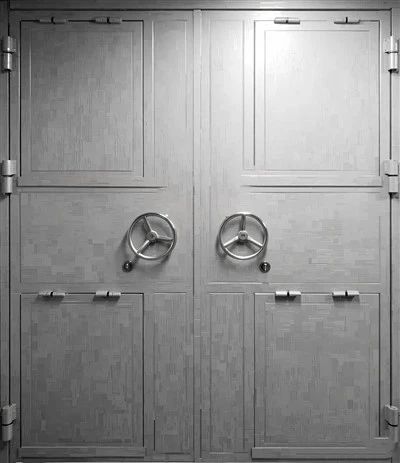
The first common point of confusion: airtight doors can block wireless signals. That’s a real issue. A solid, metal airtight door with a thick frame acts like a Faraday cage, shielding the space on the other side from Wi-Fi, Zigbee, or Bluetooth signals. If you have a smart airtight door in a home office, for example, and you want it to sync with your smart lock, security camera, or HVAC system, a signal-blocking door could break that connection. Early on, I had a client who installed a heavy-duty airtight door between their main living area and a home lab. They bought a smart lock for the door, but it wouldn’t connect to their Alexa system—turns out the steel door’s seal was blocking the Zigbee signal. We fixed it by adding a small wireless repeater near the door frame, which is a simple, low-cost solution that doesn’t compromise the door’s airtightness.
That example leads to a bigger point: airtight door design doesn’t have to sacrifice connectivity. Modern airtight doors can be built with integrated smart components without weakening their seal. For industrial clients who need Explosion Proof Airtight Door solutions—doors that seal tight during an explosion to contain blast pressure and toxic fumes—we now integrate wireless sensors directly into the door frame, wired through hidden channels that don’t break the airtight gasket. These sensors connect to the building’s smart safety system, alerting managers if the door is breached (even if the breach is small enough to break the airtight seal) or if the pressure inside the room reaches dangerous levels. It’s a perfect combination: the door does its primary job of containing hazards, and the smart system adds an extra layer of monitoring.
Another area where compatibility shines is energy efficiency. Airtight doors are a key part of air-sealing a home or building, which reduces HVAC workload and cuts energy costs. Smart home systems already use data from temperature and humidity sensors to adjust heating and cooling. When an airtight door is synced to the smart system, it can provide real-time data on whether the door is fully closed—something basic door sensors can miss. For example, if a smart thermostat detects that a room is losing heat, it can check the airtight door’s status to rule out a gap before calling a technician. I recently worked with a custom home builder in the Pacific Northwest who installed our airtight doors on the home’s exterior and connected them to the homeowner’s smart HVAC system. The result was a 15% reduction in annual energy bills, according to the builder’s calculations. That’s a win-win: the door keeps the air sealed, and the smart system uses that data to optimize energy use.
Of course, there are cases where compatibility is trickier—but not impossible. Industrial clients who need Blast Resistant Door or Explosion Relief Door solutions often have strict safety standards that must be met. These doors are designed to withstand extreme force, so their seals are even more robust. The key here is choosing smart components that are certified to work with blast-resistant or airtight designs. At our company, we test all our smart-enabled airtight doors to ensure that adding sensors or connectivity doesn’t compromise the door’s ability to meet industry safety standards—like ASTM E119 for fire resistance or UL 2017 for security. We also provide detailed documentation for architects and builders, so they can integrate the doors into their smart home or building systems without running into code issues.


A common misconception is that airtight doors are only for big industrial buildings. But more and more luxury residential homes, especially those in areas with extreme weather or high security needs, are installing airtight doors—think sound-sealing doors for home theaters, or air-sealing entry doors for homes in flood zones. For these homeowners, integrating the door with their smart home makes the space more comfortable and secure. We recently supplied a set of our Armour Guard Doors to a homeowner in Florida, who used them as exterior entry doors. The doors are airtight (to keep out humidity and salt air) and connected to their smart security system, which alerts them if the door is opened when they’re away, and syncs with the smart sprinkler system to avoid overwatering near the door’s threshold. The homeowner told us it was the best of both worlds: the door did what it needed to for their climate, and the smart system added convenience.
So, are airtight doors compatible with smart home systems? The short answer is yes—but it’s not a one-size-fits-all. It depends on the type of airtight door, the smart home’s connectivity, and how the two are integrated. The biggest mistake I see is assuming that airtight doors and smart tech can’t work together, without considering the simple fixes—like wireless repeaters, integrated sensors, or choosing doors designed with smart connectivity in mind. For my part as an airtight door supplier, that means building doors that don’t just meet performance standards, but are designed to work with the smart systems that people rely on every day. If a door is going to seal a space from threats, or optimize energy use, it shouldn’t be a separate part of the home—it should be part of the ecosystem.
If you’re considering adding an airtight door to your smart home or building system, or you want to learn more about our compatible airtight door solutions, we’re here to help. Whether you need an airtight door for a residential home, an industrial facility, or a commercial lab, we can work with you to ensure it integrates seamlessly with your smart setup. Reach out to our team to discuss your specific needs and find the right solution for your space.
References
- American Society of Heating, Refrigerating and Air-Conditioning Engineers (ASHRAE). (2021). Ventilation and Acceptable Indoor Air Quality in Residential Buildings. ASHRAE Standard 62.2.
- Underwriters Laboratories (UL). (2020). Standard for Safety for Burglary-Resistant Alarms and Accessories. UL 2017.
- National Fire Protection Association (NFPA). (2019). Standard for Fire Doors and Other Opening Protectives. NFPA 80.
- International Code Council (ICC). (2022). International Residential Code (IRC) – Chapter 7: Exterior Walls. ICC.
- World Health Organization (WHO). (2020). Household Air Pollution and Health. WHO Press.